Photobucket
Showing posts with label threeofcups. Show all posts

2.26.2010

Sketchbook - Three of Cups

Sketchbook - Three of Cups


O, delicate triumvirate! How the world envies your happy dancing.

I really wanted to think of something that would indicate the fullness and delicacy of this card. Here we see three conjoined soap bubbles, remaining magically intact as other bubbles burst all around them.

A wand looks on approvingly from the sidelines -- its actions may have brought them all together, but now it's perfectly superfluous. Though it does serve to remind us that expressions of openness and love are always more accessible than you think they are. There are always more where these came from, and the phenomenon never fails to enchant.


Photobucket

1.21.2010

"More Subjects, More Objects, More Love..."


When it comes to symbolic gestures, you really can't beat Ecuador's "glass frog". Since the creature lacks any pigment, you can literally see his heart beating through his chest. Awww... More awwws for this barely-there gecko, also recently unearthed. Researchers are racking up the discoveries down there, but they're still only the beginning -- National Geographic speculates that, all told, we've only identified a tiny percentage of all the world's life forms. And I bet you thought we'd more or less sorted it all out by now!

The glass frog is my hero today. I've put him at the helm of the Three of Cups because of his all-too-poetic transparency -- I ought to channel his fearlessness a little more often and let people make of my lungs and pancreas and feelings what they will. But really all these "new" animals deserve a spot on the card, because collectively they are a reminder of the life our planet is teeming with, the opportunities yet to be discovered, and the vulnerability that is universal among all life forms -- as superior as we humans consider ourselves to be, what with our chain-mail and wisecracks and neatly pressed khakis, we are not much different than a horde of pencil eraser-sized lizardettes swarming across the jungle floor.

While the love in the Two rebounds back and forth in a closed loop between two subjects, the Three invites you to open up in search of more -- more subjects, more objects, more love. It heralds a season of availability and generosity, regardless of how this jibes with your fastidious economic principles. Conserve through giving -- when it comes to emotion, ecology trumps economy every time. [Via]


Photobucket

5.24.2009

Three of Cups

1. Abundance
2. Marriage or union
3. Merriment and hospitality.

-- David Allen Hulse, The Western Mysteries

2.09.2009

"There Is No Hurt, Only More Love..."


What is it about three women together? Pamela Coleman-Smith's Three of Cups was the first to use this motif, and plenty of others have continued the tradition. These scenes all broadcast both intimacy and openness; they hint at a special bond where everything is shared and all parties are supported.

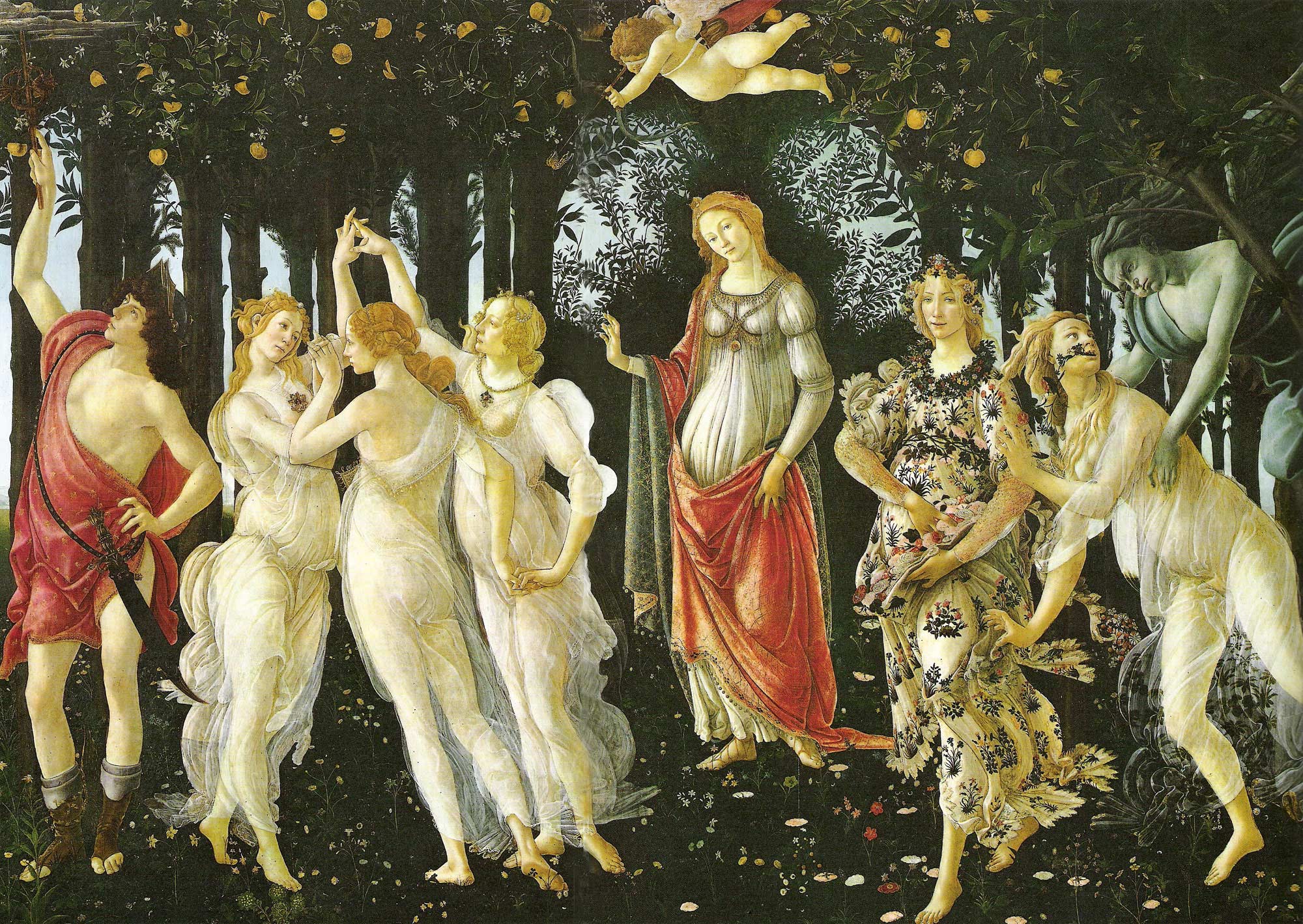
The symbol that Coleman evoked can be found throughout all of Western culture, from Macbeth's witches to Bill Paxton's wives on Big Love. We see them dancing dreamily in Botticelli's Primavera, we watch them blending and merging in Robert Altman's Three Women. In fact, countless movies and television shows feature a strong trio of women as their central characters. It's a classic story element that draws our attention like a magnet, thanks to our unconscious attraction to ancient symbols. Often the women are identical, interchangeable, or linked supernaturally in some way -- whatever it takes to present them as a unified force, a circuit.

The cover of Cat Power's recent album, Jukebox, caught my eye the other evening. I had just watched her perform at the Apollo Theater in Harlem, an event I won't ever forget. A notoriously private and troubled artist with a history of performance anxiety, Chan Marshall seemed to have put up so many barriers between herself and her public that night -- she relied heavily on cover songs (which Jukebox mainly consists of), like James Brown's "Lost Someone"; she performed in near-darkness onstage, she barely uttered a syllable between songs, she often physically retreated upstage, singing from behind her band-members. With her voice, however, she did everything possible to draw the audience in -- every song was painstakingly performed with the utmost vulnerability. And as the set progressed, the lights grew ever-so-slightly brighter and brighter, until what had begun as a cold and isolating experience became intoxicatingly intimate. By the end, when Marshall stepped down from the stage to wander the aisles and sing among the audience, there seemed to be a collective holding of breath for fear of scaring her away, like you do when a butterfly or dragonfly lands on you. As she finished the show, she threw roses to the crowd. Finally after two full hours she said goodnight; it was obvious that there would be no encore -- there was literally nothing left for her to give.

The persisting illusion that intimacy and love are only truly possible between two people runs contrary to these kinds of experiences, which are quite common in our everyday lives. The Three of Cups encourages us to share ourselves and each other, and to accept the same from others when it is offered. It is a celebration of the egolessness that can be achieved, however temporarily, through creative pursuits or any situation in which one person invites others into his or her world.

On all issues pertaining to abundance, I defer to Mother Teresa's logic: “I have found the paradox that if I love until it hurts, then there is no hurt, only more love.”



Photobucket

9.14.2008

Three of Cups


This card is so simple that a glimpse at its artwork usually tells you everything you need to know; an unprecedented bounty of fulfillment, gratitude and joy. Some decks have entitled this card "Abundance," which seems to connect the card to the Autumn harvest and the celebratory spirit that accompanies it.

This feeling of warmth and plenty is what the organization Bitone tries to instill in Ugandan children who have suffered the loss of their parents or their homes due to the myriad life-threatening issues that families face in that nation. According to their site, Bitone means "talent," which is fitting since one of their strategies is to help children and youth "heal their lives by teaching them traditional African performing arts; music, dance, folklore and theater."

Click here to listen to the children of Bitone sing "All Is Full of Love," a song by Björk (the original version has become famous for its music video, in which two robots bond emotionally despite their sterile surroundings). Their photos and songs will give you some inkling of how vital and gratifying this experience is for the displaced children of Uganda. Hopefully this card will ease you into an appreciative and joyful season of your own. [Via]